
Mid-Century Modern Style
A Life Well Designed
Born from the belief that good design could make everyday life better, Mid-Century Modern brings optimism, ingenuity and enduring beauty into the home.
Beauty That Belongs
There is an ease to Mid-Century Modern that is difficult to fake. The furniture is distinctive, but rarely feels precious. The architecture is clean, but not cold. Even the most recognisable pieces were created with the everyday act of living in mind.
Perhaps that is why the style continues to feel so natural today. It gives beauty a practical purpose—creating rooms that are comfortable, functional and visually memorable without asking the home to become a showcase.
The Story
Mid-Century Modern grew from a simple but powerful idea: the home should work with the way people actually live. As lifestyles changed and designers began questioning older conventions, rooms became more open, furniture became more adaptable, and the boundary between architecture and everyday living became less rigid.
This was not about stripping a home down to the bare minimum. It was about finding a better relationship between form, function and comfort. Organic curves softened cleaner geometry. Large windows connected interiors with nature. Furniture became an important part of the architecture rather than something added afterwards.
What emerged was a style that felt optimistic without being naïve, innovative without being showy. Its most enduring quality may be that it never treated function as the enemy of beauty. Instead, it made the two inseparable—and created some of the most recognisable forms in modern interior design along the way.
STYLE DNA
Signature Elements
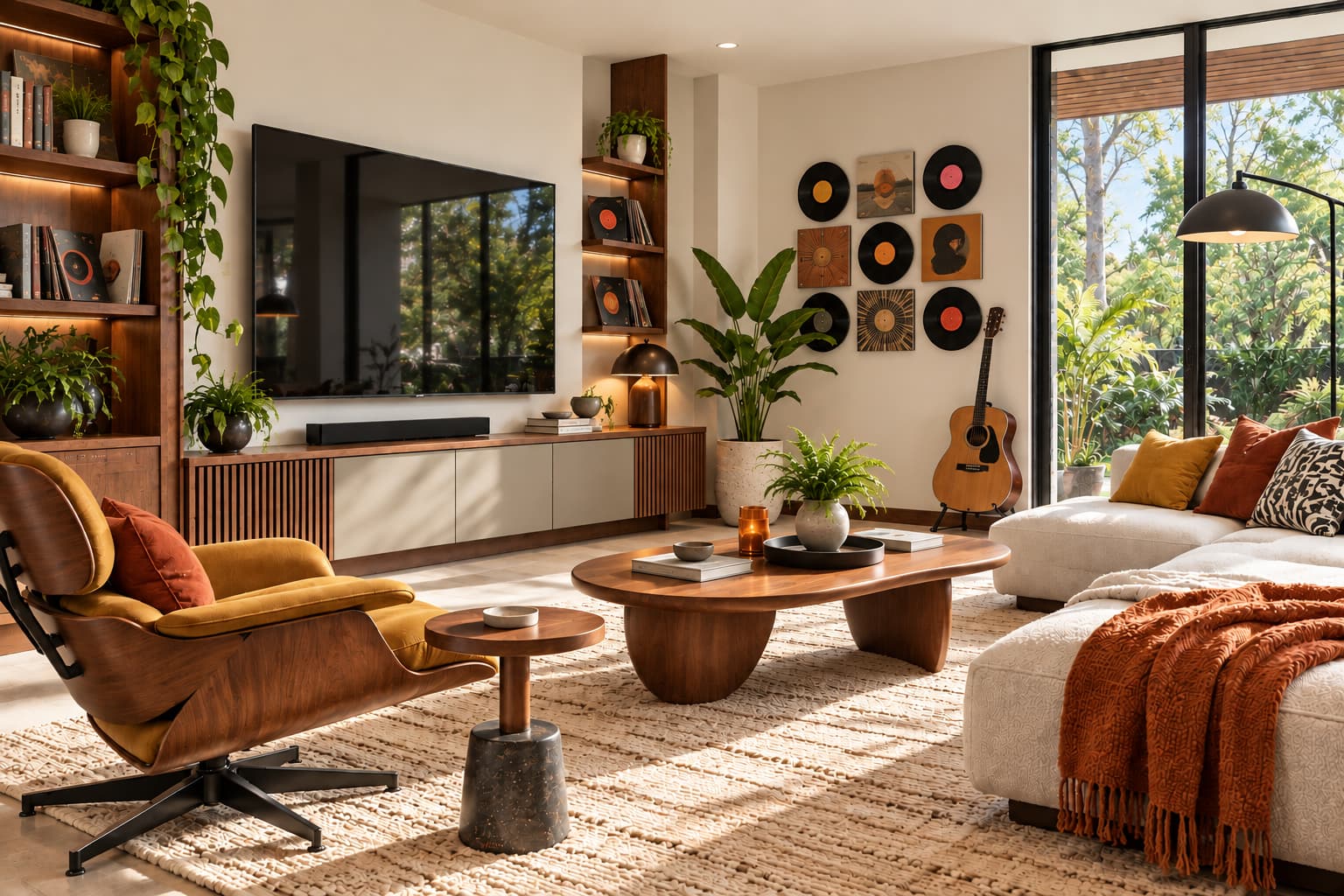
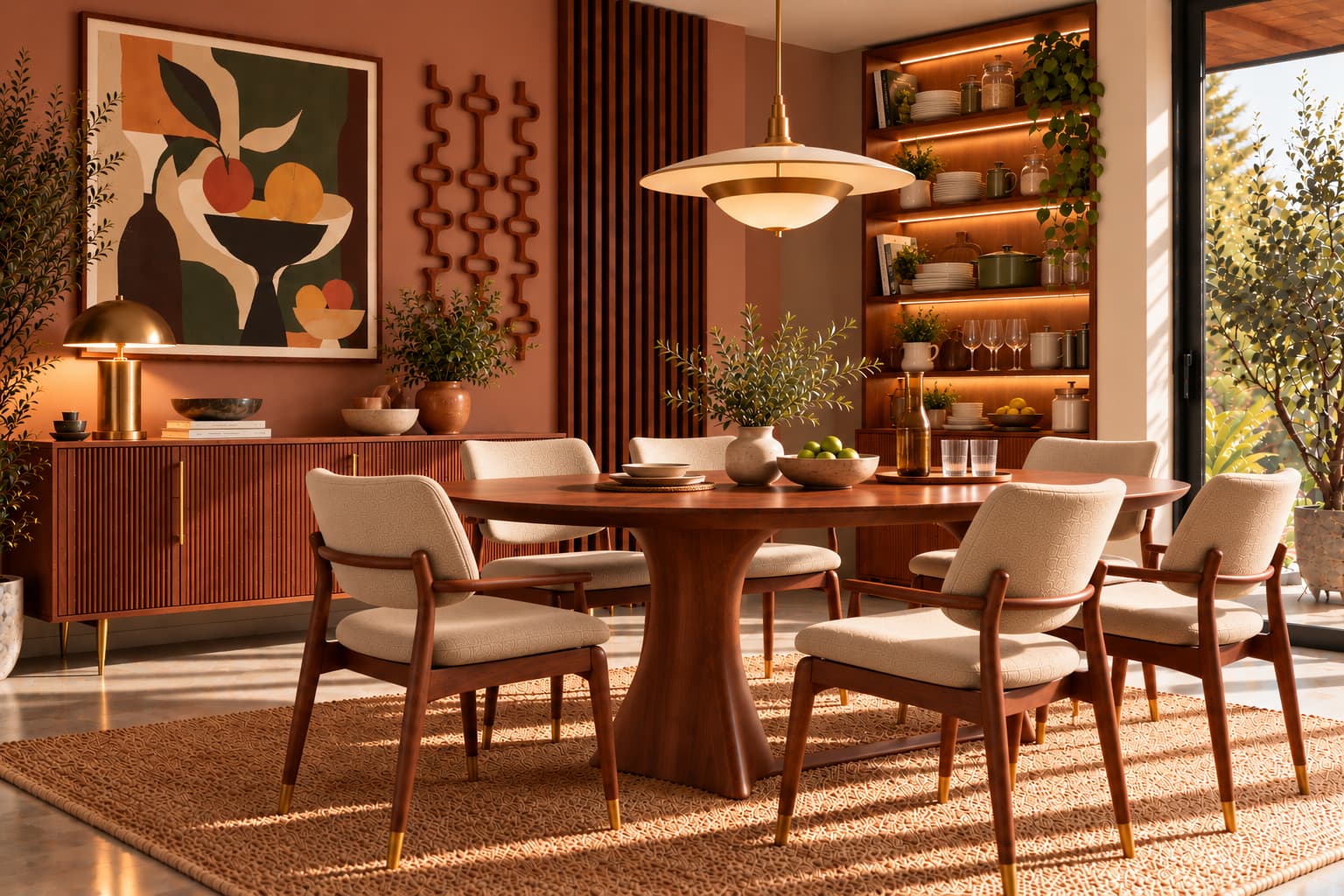
Clean geometry softened by organic curves, practical pieces given expressive character, and materials chosen for both beauty and purpose give Mid-Century Modern its distinctive language. The result feels considered and recognisable without becoming overly decorated.
The character becomes clear in the details:
- Clean lines balanced with organic, sculptural forms
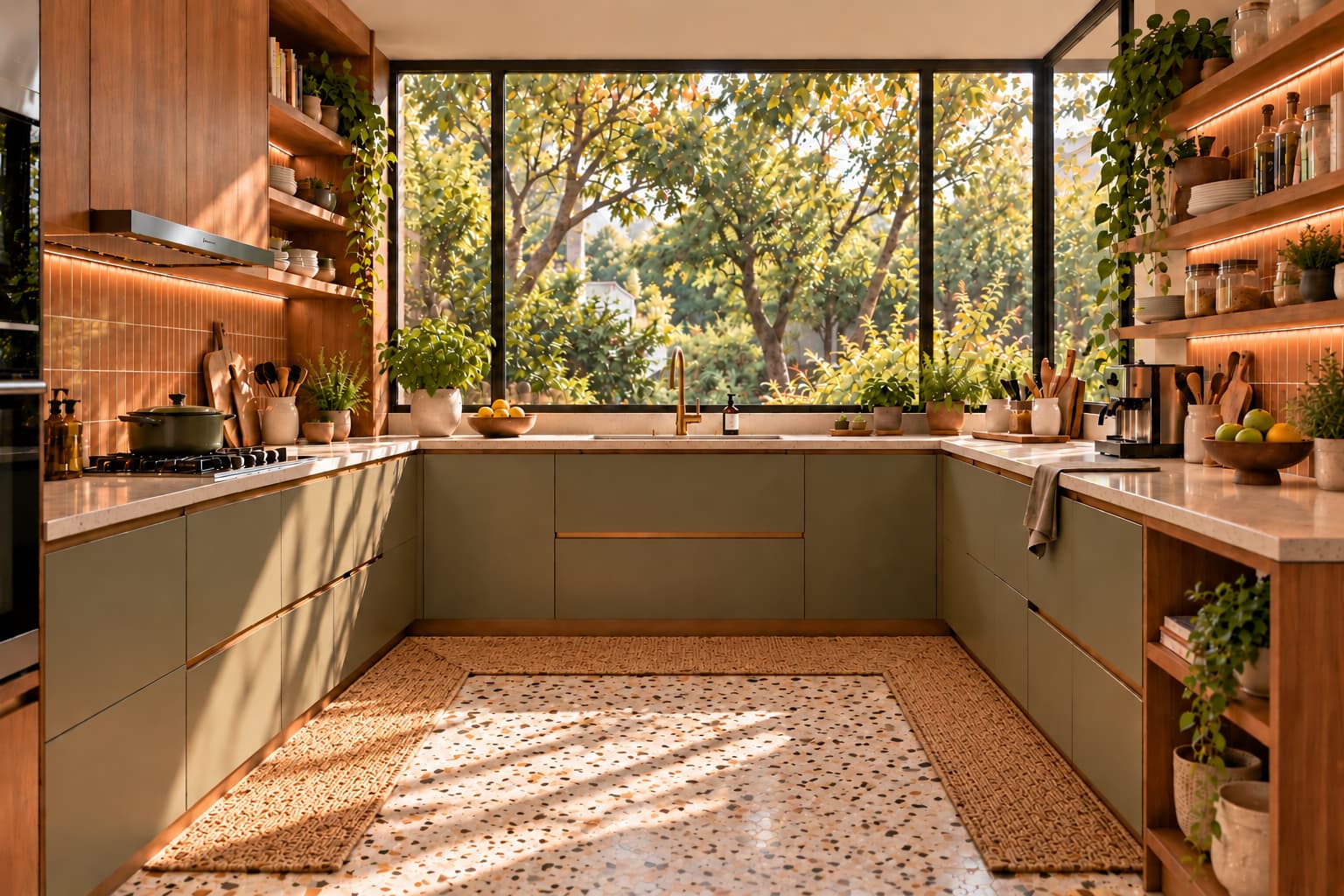
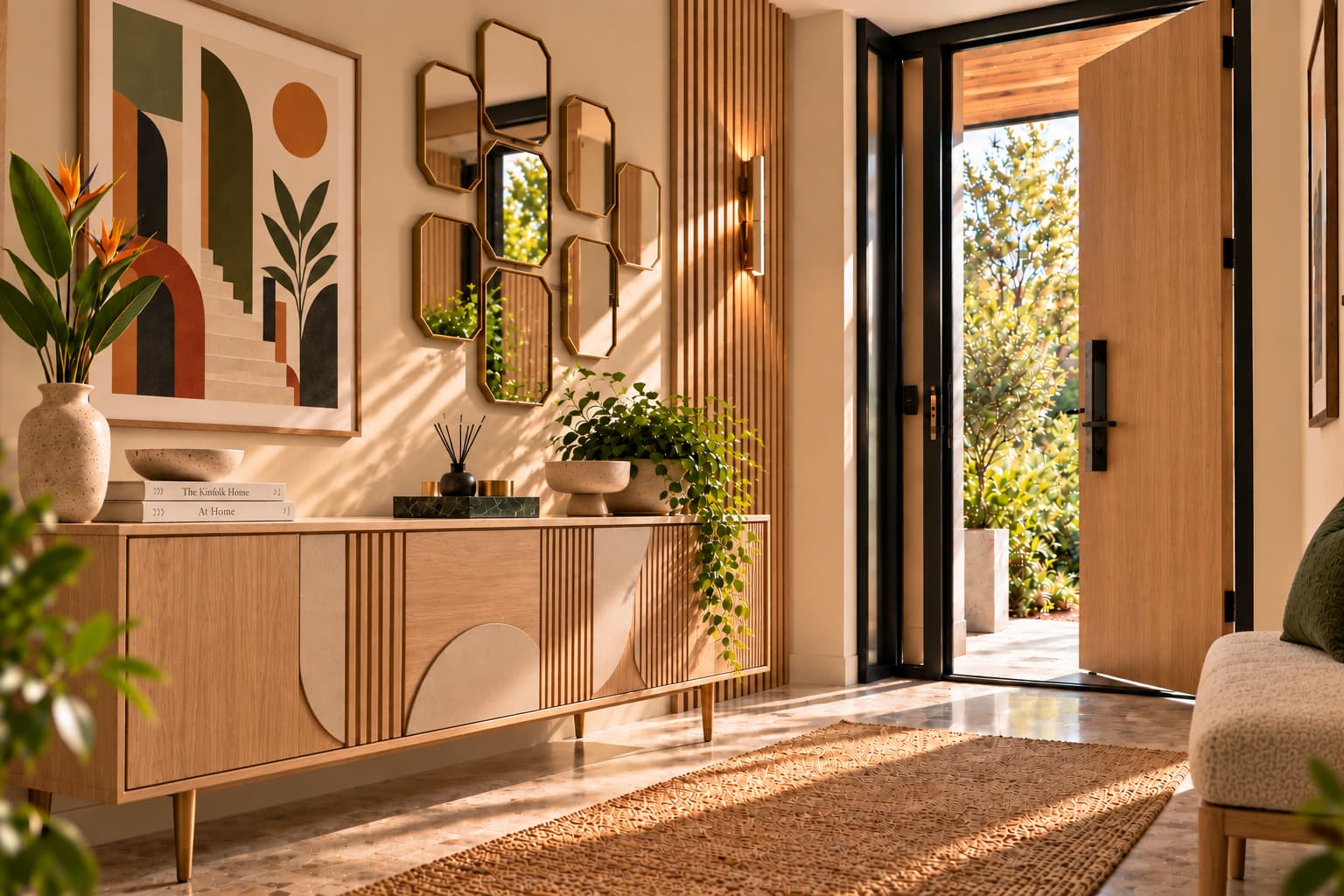
- Use of warm woods such as teak, walnut and oak
- Tapered legs and elevated furniture profiles
- Comfortable seating with distinctive silhouettes
- Natural materials paired with innovative finishes
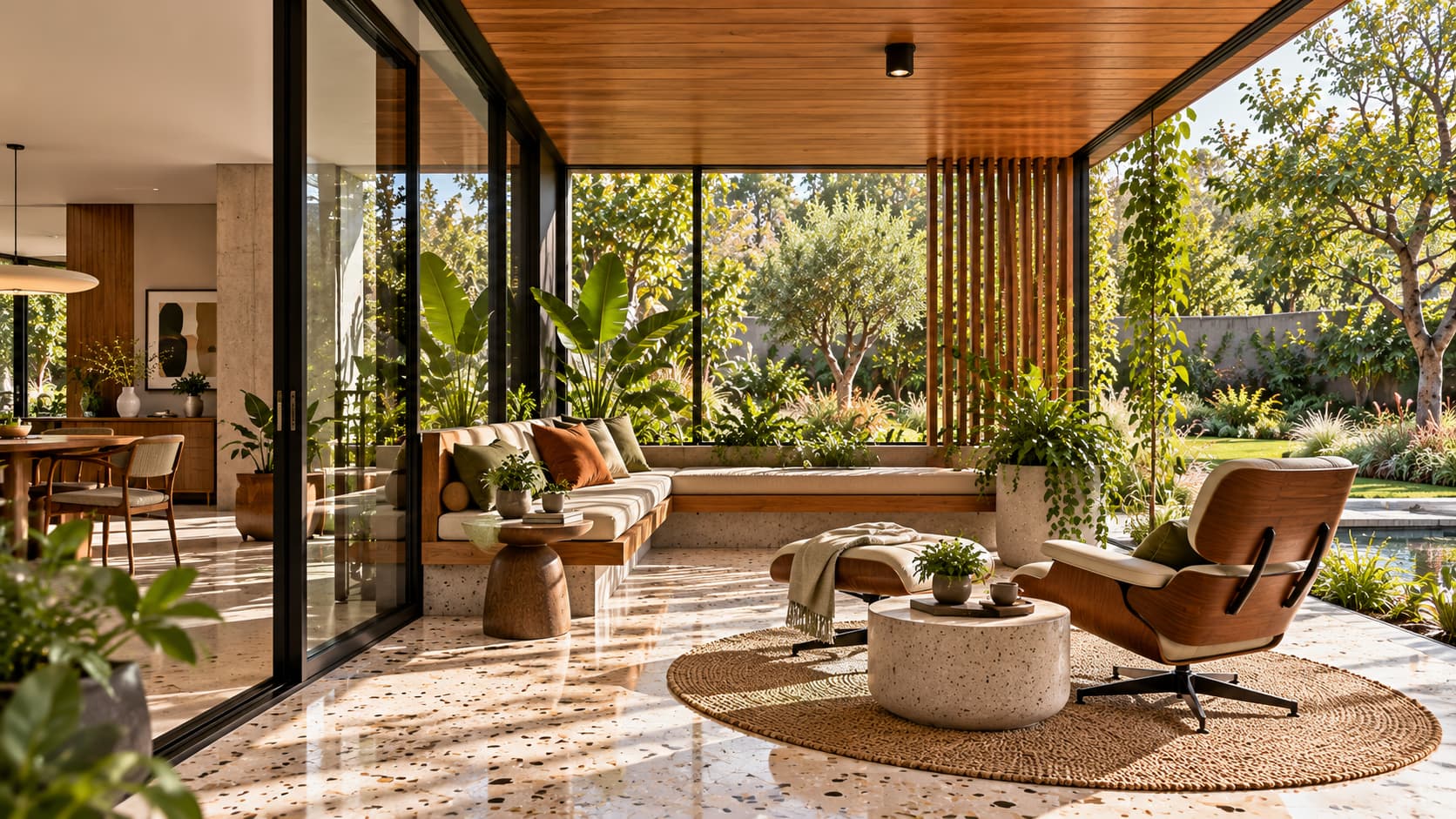
- Open layouts with strong visual connection to the outdoors
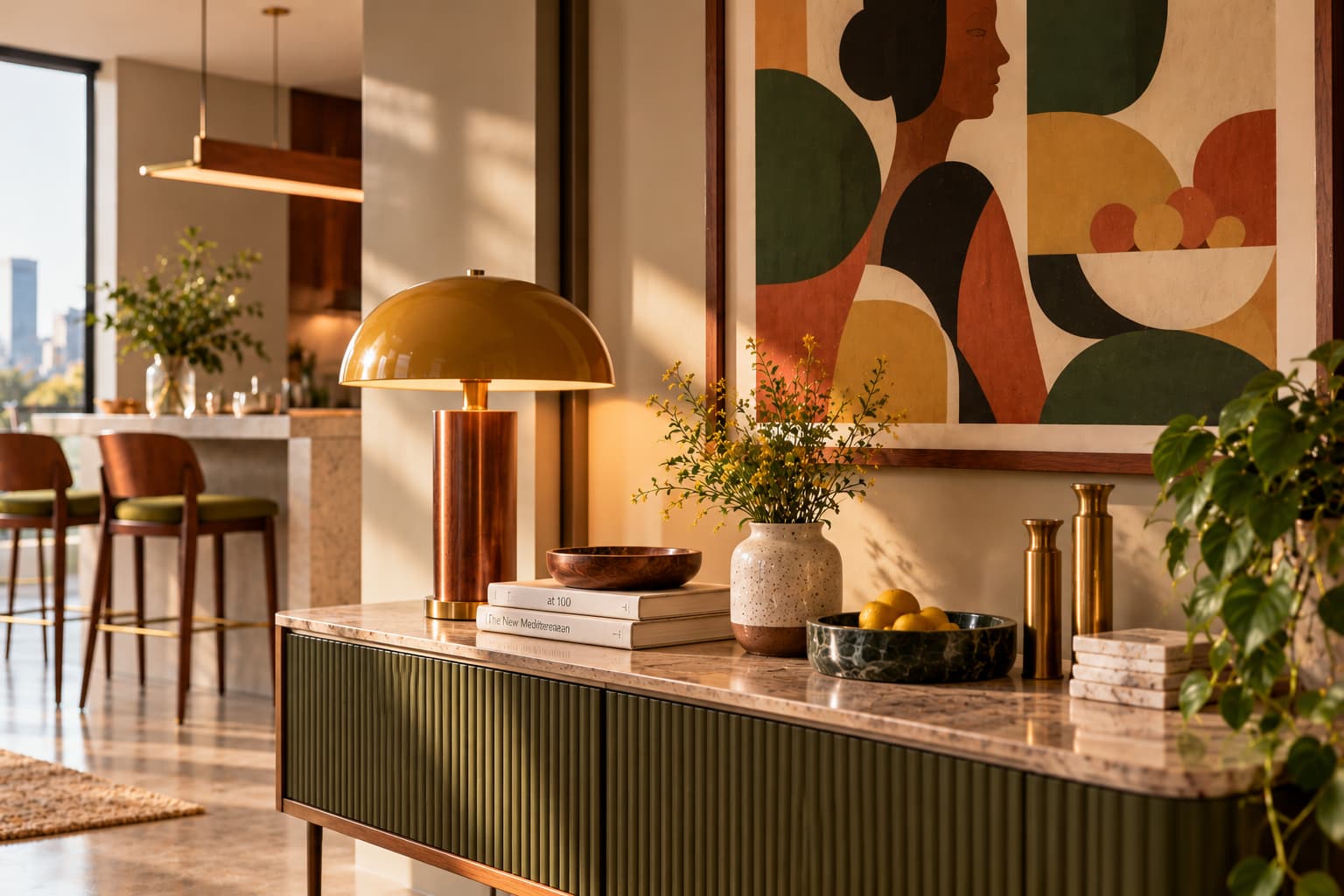
- Geometric patterns and carefully placed colour
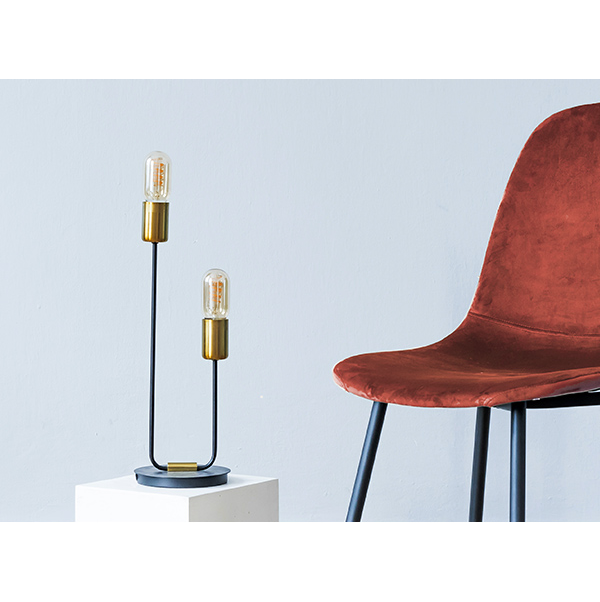
- Statement lighting with sculptural, functional forms
The Mid-Century Modern Editorial
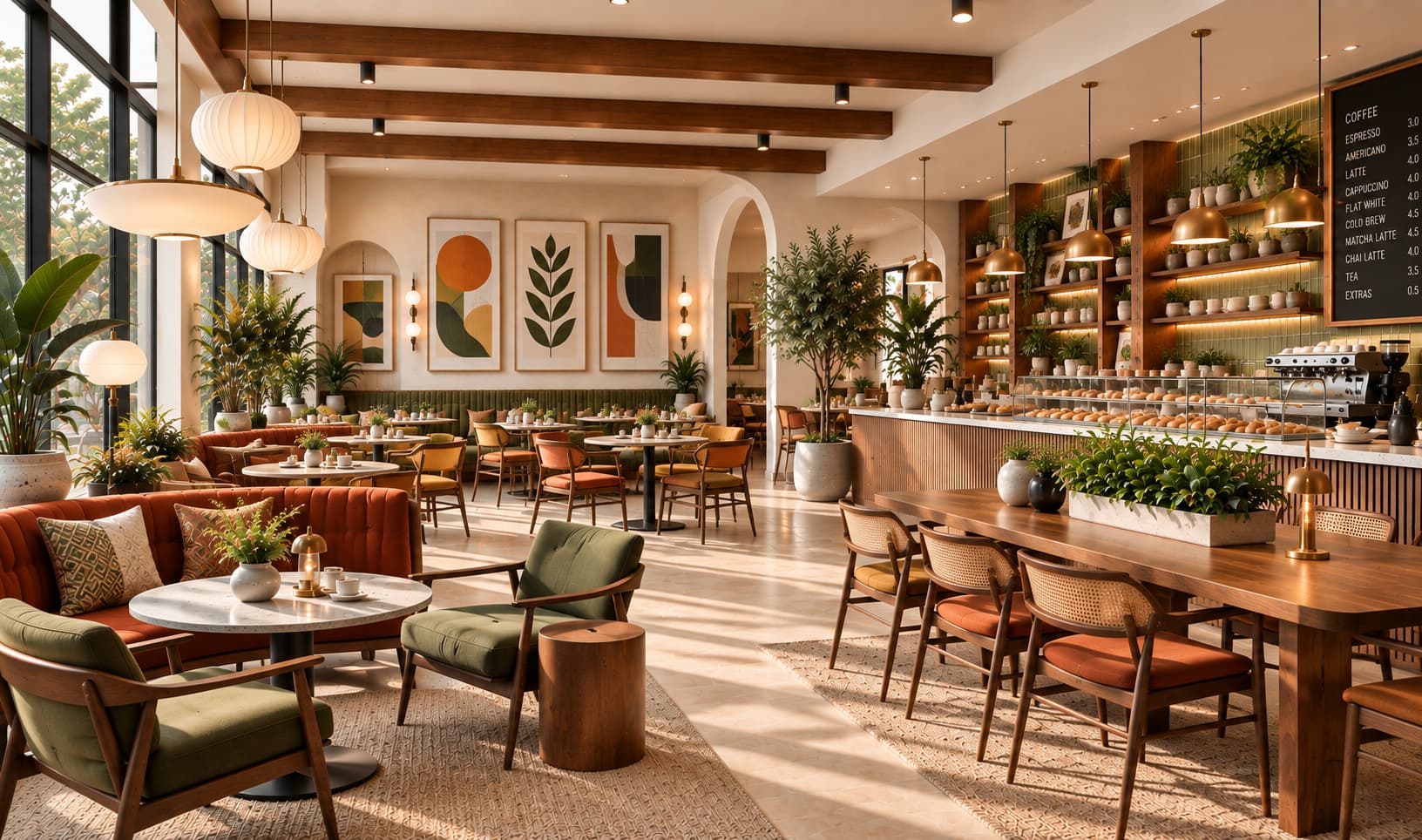
A visual journey through optimistic spaces, iconic silhouettes and the effortless character that makes this design language endure.
Editor's Note
Did You Know?
Some of Mid-Century Modern’s most recognisable curves came from experiments with materials, not simply from an artistic desire to make furniture look different. Designers such as Charles and Ray Eames developed new ways of moulding plywood into complex curves that could follow the human body, later experimenting with materials such as fiberglass for lightweight, mass-produced furniture. Innovation in how furniture was made helped shape the distinctive forms we now associate with Mid-Century Modern.
OUR PERSPECTIVE
Design With A Sense Of Possibility
What sets Mid-Century Modern apart is the way it brings different design ideas into the same space without making them compete. Clean architectural lines are softened by organic curves. Warm timber sits alongside newer, more experimental materials. Furniture is often elevated on tapered legs, allowing light to move underneath it and making rooms feel more open. Large windows and open layouts strengthen the connection between the interior and the outdoors.
At Design Reify, we see these relationships as the real character of the style. Rather than filling a room with recognisable Mid-Century pieces, we use its design principles to shape the space itself—balancing geometry with softness, structure with comfort and practicality with visual character. That is what allows the style to feel distinctive without becoming a recreation of a particular era.
Core Design Focus
- Clean Geometry, Softened by Organic Form
- Furniture Designed as Part of the Architecture
- Warm Materials & Experimental Surfaces
- Open Spaces With Indoor–Outdoor Connection
CREATIVE DIRECTION
Expert Tips
- Let the architecture and furniture read as one composition.
- Choose iconic forms for their shape, not simply their name.
- Mix warm timber with one or two more unexpected materials.
- Keep furniture visually light so the room retains its openness.
- Use colour as an accent against a quieter architectural base.
- Balance strong silhouettes with enough space around them to be appreciated.
DESIGN PITFALLS
Common Mistakes
Mid-Century Modern can lose its character when its recognisable elements are treated like a checklist. The style is less about collecting iconic pieces and more about creating the right relationship between architecture, furniture, materials and space.
- Turning the room into a collection of recognisable Mid-Century pieces.
- Choosing vintage furniture at the expense of comfort and everyday use.
- Using wood, geometric patterns and retro colours without enough visual restraint.
- Making every piece sculptural, leaving the room with nowhere for the eye to rest.
- Treating open space as emptiness instead of part of the overall composition.
CURATED SPACES
And That's The Beauty of it
Sometimes, it’s the simplest details that give a home its character. Whether it’s a beautifully shaped chair, a warm timber detail or simply a room that gives you more space to breathe, we’ll help you create a home that feels considered without ever feeling too considered.
Related Posts
No posts were found for provided query parameters.